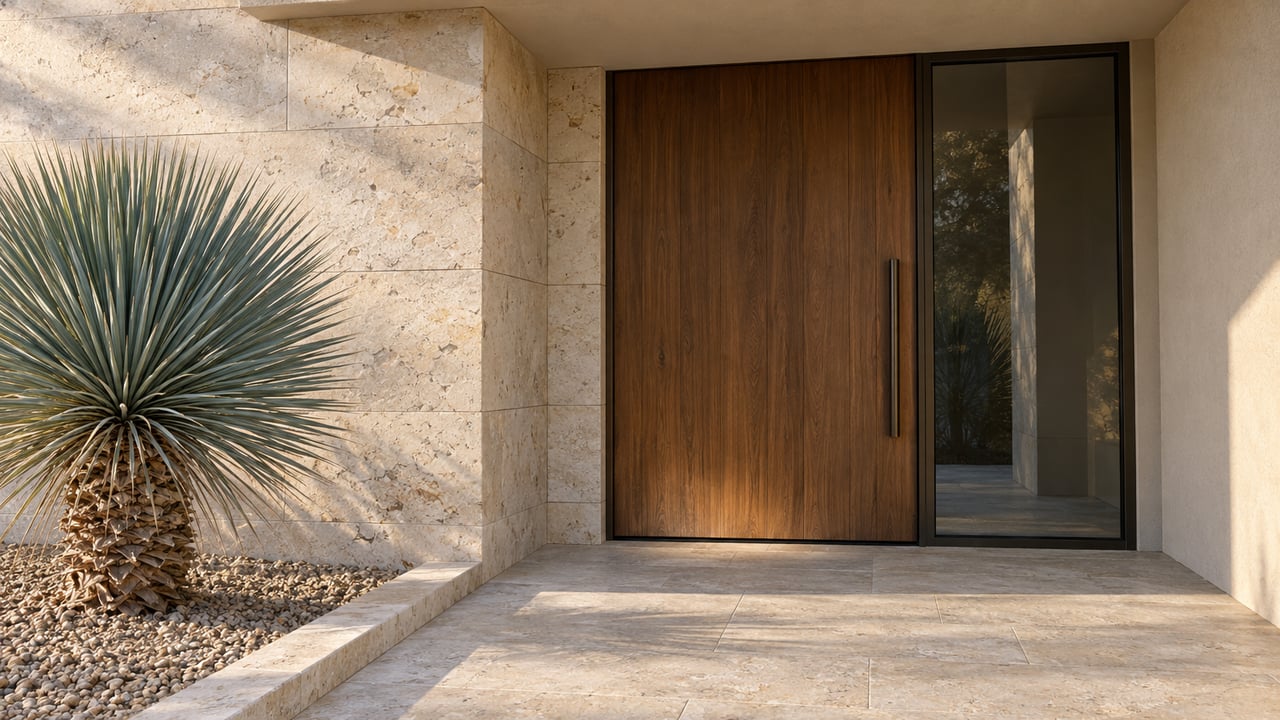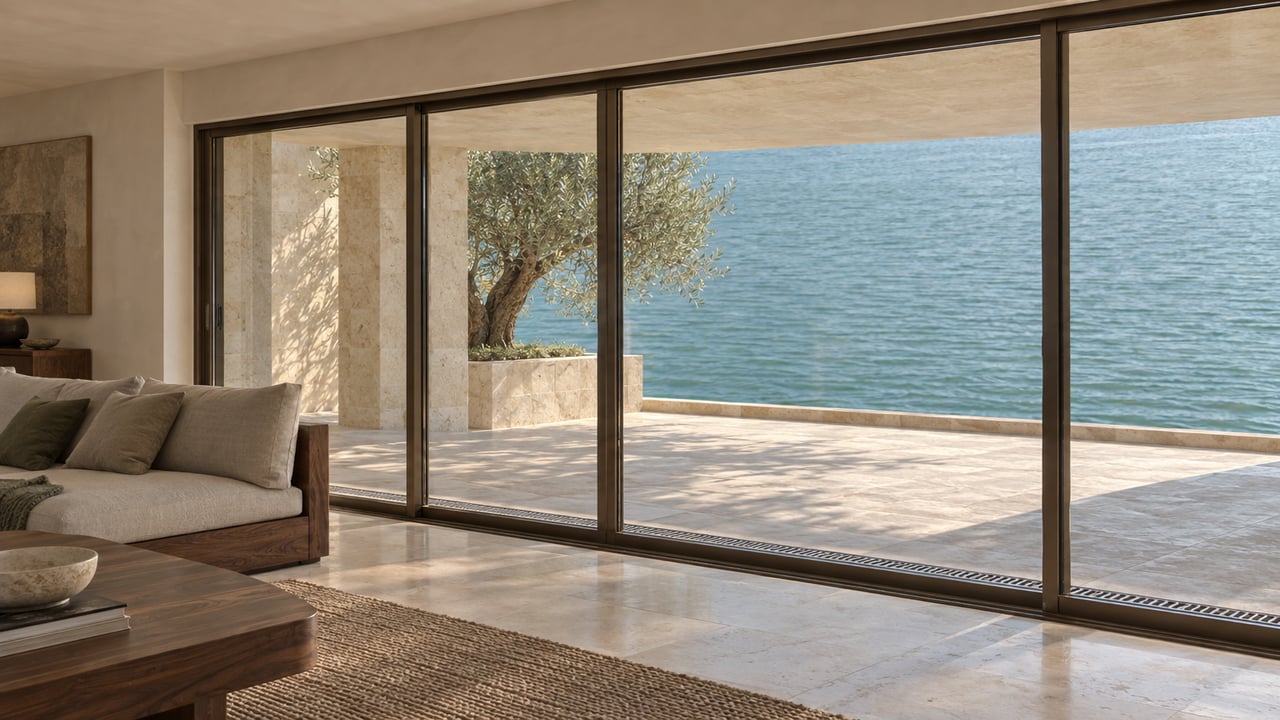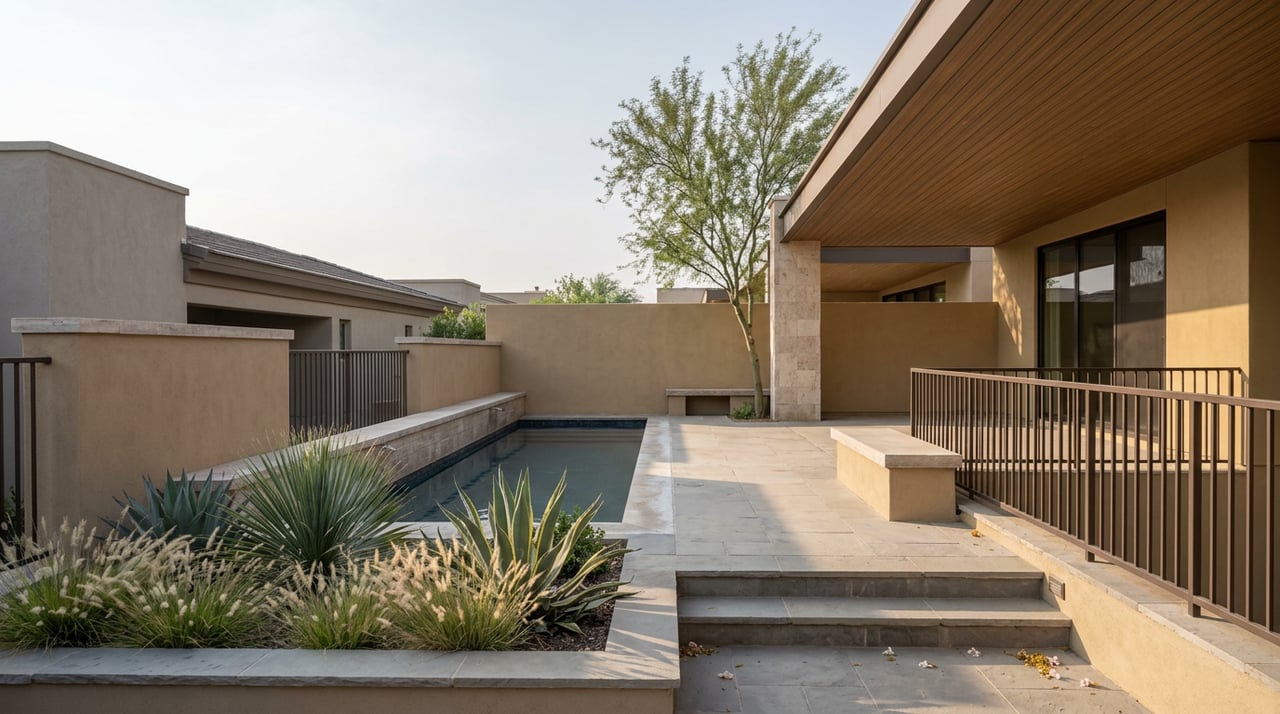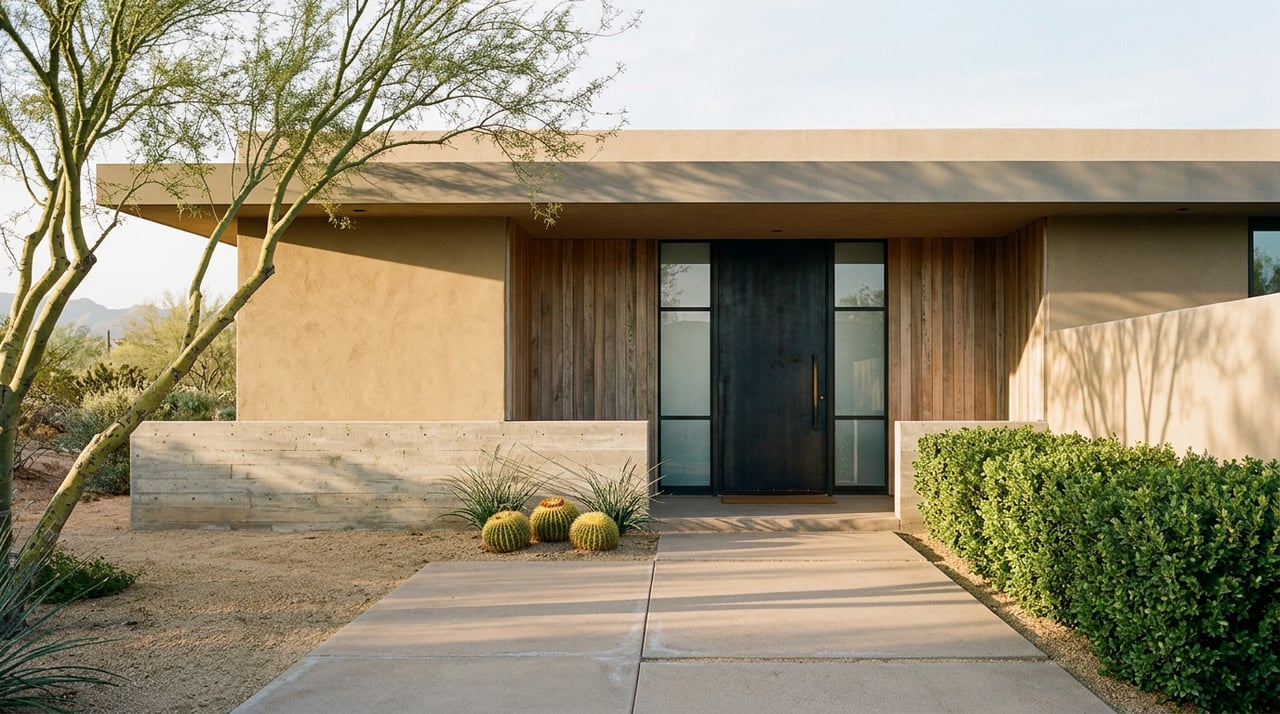
Two homes sit behind the same guard gate in Rancho Nevada Estates. Both were built in the 1960s. Both sit on lots in the same narrow band, somewhere between roughly a half-acre and three-quarters of an acre, the standard footprint for this stretch of central Las Vegas. On paper, from the assessor's lot lines alone, they look like near-identical properties.
Recent resale listings in the neighborhood tell a different story. One home came to market with the seller advertising "nearly $500k in recent renovations." Another closed after more than $700,000 in documented improvements, including a casita addition that pushed the living space past 4,000 square feet. A third sold as-is, with the listing disclosing a blocked sewer line and an incomplete repair, a detail that shaves real dollars off an offer before a buyer ever gets to negotiate on finishes.
Same lot size range. Same decade of construction. Wildly different outcomes at closing. If you're comparing Rancho Nevada Estates to other Las Vegas neighborhoods using the number you saw on a portal, you're comparing the wrong number. The land here barely moves. The renovation history does almost all the work.
Why This Market Doesn't Behave Like a Normal Comp Set
Most Las Vegas neighborhoods generate enough sales in a given stretch to produce a real curve. Enough transactions happen that outliers get smoothed out, and a median price actually reflects something.
Rancho Nevada Estates doesn't work that way. This is a small, established enclave of roughly 124 homes built mostly in the 1960s and 70s, tucked just south of US-95 and bordered by Alta Drive, in the 89107 ZIP code alongside its better-known neighbors Rancho Circle and Rancho Bel Air. With inventory that thin, a handful of active listings and a small run of closings define the entire market at any given time. Every sale is less a data point in a trend line and more its own individual case.
That scarcity also explains why comparisons across the valley's vintage guard-gated communities can be misleading if you only look at price. A spring 2026 comparison of the valley's historic guard-gated enclaves put Rancho Circle's median around $2.85 million, roughly $1 million above Rancho Nevada Estates' $1.85 million median. The gap isn't really about neighborhood prestige. Rancho Circle's lots run one to five-plus acres, more than double the largest lots in Rancho Nevada Estates. Two adjacent, similarly aged communities, priced a tier apart, largely because of dirt, not distance from the Strip or design pedigree.
Inside Rancho Nevada Estates itself, the lots don't vary enough to explain the swings you see between individual sales. Something else is doing the pricing.
What You're Actually Bidding On
Strip away the lot, which barely changes from house to house, and what's left is six decades of individual owner decisions. Some houses got a kitchen refresh in the 2000s and nothing since. Others got a full systems overhaul, a resort-style backyard, or a casita built out for guests or a home office. A buyer touring three houses on the same street in Rancho Nevada Estates isn't touring three versions of the same product. They're touring three separate renovation histories wearing the same lot size.
That's the real mechanism behind a price spread that can run into the hundreds of thousands, sometimes over a million dollars, between two houses that look interchangeable on a listing sheet. The renovation receipts are doing the pricing work that a bigger, more liquid neighborhood would otherwise hand to the comp set.
For a buyer, that means the inspection and the seller's disclosure carry more weight here than they would in a newer subdivision with dozens of recent comps to lean on. The sewer-line disclosure on that as-is sale wasn't a footnote. It was effectively the price.
The HOA Still Has a Say
A lot of Las Vegas's vintage neighborhoods, the Scotch 80s and the McNeil Estate area among them, have no HOA at all, which gives owners wide latitude to renovate or rebuild with minimal architectural oversight. Rancho Nevada Estates is different. Property records show an active homeowners association, the Rancho Nevada-Nevada Estates Homeowners Association, which means a buyer planning significant exterior changes, an addition, a new facade, a visible casita, should expect an architectural review step that some of the valley's other historic pockets don't require.
That's a detail worth confirming early if a renovation budget is part of your purchase plan. It doesn't make the process harder so much as it makes it a process, one more reason to build in time and expert guidance before committing to a scope of work.
What This Means If You're Buying or Selling Here
For a buyer comparing Rancho Nevada Estates against other central and vintage Las Vegas neighborhoods:
- Don't anchor to lot size or square footage alone. Ask for the renovation and permit history on any home you're serious about. In this neighborhood, that history is closer to the real price driver than the assessor's numbers.
- Budget for the HOA's architectural review timeline if your plans include visible exterior work.
- Treat inspection findings as negotiating leverage, not a formality. With so few comps to fall back on, disclosed issues like the sewer line in that recent as-is sale carry outsized weight in setting the final number.
For a seller, the lesson runs the other direction. A documented renovation history, receipts, permits, before-and-after context, isn't just a nice-to-have in a listing. In a market this thin, it's the primary evidence a buyer's agent will use to justify a price above the neighborhood's median. Sellers who can produce that paper trail are negotiating from a stronger position than the square footage alone would suggest.
A Quiet Corner, Still Close to Everything
None of this changes what draws people to Rancho Nevada Estates in the first place. It remains one of the valley's original guard-gated communities, close enough to the Strip and downtown to matter for commute times, quiet enough that longtime residents still describe it as one of the city's better-kept secrets. The Omelet House, a long-running neighborhood breakfast spot nearby, and Lorenzi Park just to the north are the kind of low-key, dependable neighbors that don't change much decade to decade, which is part of the appeal for buyers who want stability without giving up proximity to everything the city offers.
What changes, house to house, is what's been done to the structure itself. That's the number worth asking about before the lot size, the ZIP code, or anything else.
FAQ
Does Rancho Nevada Estates require HOA approval for renovations? Yes. The neighborhood is governed by the Rancho Nevada-Nevada Estates Homeowners Association, which is not the case in every vintage Las Vegas community. Buyers planning additions or visible exterior changes should factor in an architectural review step.
How does Rancho Nevada Estates compare in price to Rancho Circle? As of a spring 2026 comparison of the valley's guard-gated vintage neighborhoods, Rancho Circle's median sat near $2.85 million against Rancho Nevada Estates' $1.85 million, a gap driven largely by Rancho Circle's much larger one to five-plus acre lots rather than any broader difference in prestige or location.
If you're weighing a purchase in one of Las Vegas's historic guard-gated enclaves and want a clear read on what a specific renovation history is actually worth before you write an offer, Team Emanuele & Owens Real Estate can walk the comps with you house by house, not just neighborhood by neighborhood. Request a Private Consultation to start that conversation.