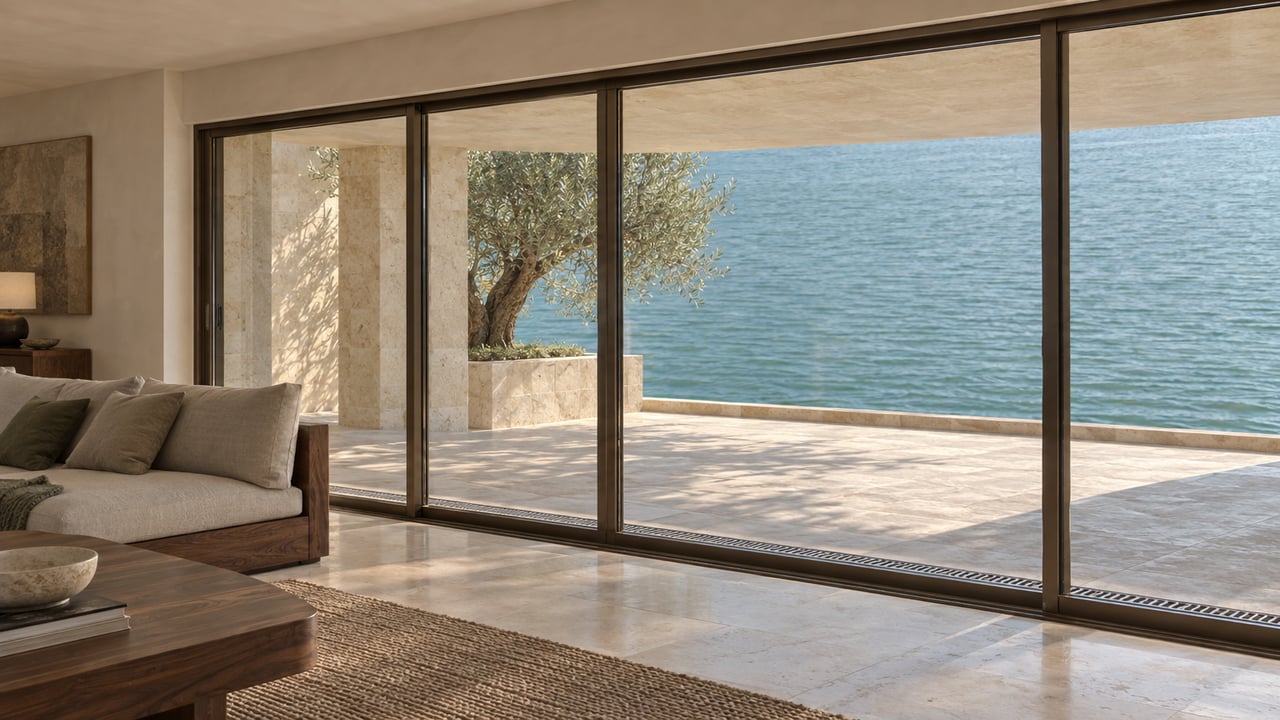
An appraiser walks into two homes in Lake Las Vegas this fall. Both are close to 3,200 square feet. Both were built within the last several years, with similar finishes and comparable lot sizes on paper. One looks straight down the water toward MonteLago Village. The other faces a neighbor's tile roof and a stretch of desert landscaping. The comp sheet treats them as the same house. The appraisal rarely does.
That gap is not a quirk of one transaction. It is the whole story of how this community prices itself, and it explains something that trips up a lot of buyers who arrive with a single number in mind: the published median for Lake Las Vegas has moved so much this year that it stopped describing any one thing.
The Same Community, Four Different Numbers
In February 2026, community-wide tracking put the Lake Las Vegas median sale price at $596,000, down 10.9 percent from a year earlier, with a median price per square foot of $329, up 9.5 percent year over year. Homes were selling in about 110 days, down from 129 days the prior February, and 85 homes closed that month compared with 68 a year before.
By May, the reported median had climbed to roughly $687,500, a much smaller year-over-year slip of about 1.6 percent, with around 237 homes listed across the community and a typical run of 133 days before going under contract.
August told a third story, and it came from the same tracker that produced the February number. By then, that same community-wide measure had shifted to $618,701, down 3.3 percent from a year earlier, a full percentage swing away from the double-digit decline it had shown six months before using the same methodology.
Then September's snapshot showed something different again: a median asking price of $778,000, down 3 percent from the prior month and 2 percent from a year earlier, with a median price per square foot of $328 and homes sitting a median of 144 days before going under contract. That figure measures what sellers are requesting, not what buyers are paying, which is a different thing entirely from the sold-price medians above it.
None of these numbers is wrong. They are measuring different slices of the same community at different moments, and the swings between them are not the market lurching up and down every few weeks. They are the mix of what closed changing month to month, between entry-level production sections and custom waterfront estates that can sell for many times as much per square foot.
For context, the Las Vegas Valley's overall single-family median sat at $475,000 in August 2026, down 1 percent from a year earlier and off the record $490,000 set that May and June. Lake Las Vegas trades well above that valley floor no matter which of its own numbers you use. The real question for a buyer isn't whether the community is expensive. It's which of six very different products that headline number is actually describing.
Six Builders, Six Very Different Prices Per Square Foot
New construction has been active across multiple phases of the master plan this year, and the builders working there sort into a clear ladder by price and lot type.
| Tier | Price Range | Per Square Foot | Who's Building It | Lot Type |
|---|---|---|---|---|
| Entry production | $625K–$925K | $310–$390 | Richmond American, KB Home, entry Lennar sections | Interior or limited-view |
| Mid production | $925K–$1.4M | $400–$480 | Tri Pointe, Pulte, upper Lennar, Taylor Morrison standard, mid-tier William Lyon | Interior, standard, select premium |
| Upper production / production luxury | $1.4M–$2.2M | $490–$610 | Toll Brothers, Tri Pointe Reserve, William Lyon Signature, Pardee Estate Collection, Taylor Morrison Esplanade | Lake-view, golf-frontage, hillside |
| Luxury | $2.2M–$4.0M | $580–$750 | Toll Brothers premium inventory, William Lyon Signature top tier, Pardee top tier | Premium lake, golf, hillside |
| Ultra-luxury custom | $4.0M–$8M+ | $700–$1,200 | Christopher Homes, Blue Heron, and other custom builders | Lake-front, premium golf-frontage, top hillside |
| Ultra-luxury beyond $8M | $8M+ | $1,000–$2,000+ | Full architect-builder custom collaborations | Lake-front mansion sites, flagship golf and hillside |
Two houses in this table can be the same square footage and sit nearly $1,000 per square foot apart, because the price difference was never really about the house. It was about which lot the house is sitting on. That is the mechanism behind the moving median: swap a few closings from the top of this ladder for a few from the bottom, and the reported average for the whole community shifts by tens of thousands of dollars without a single home actually changing in value.
At the low end of the range, condo product pushes the floor even lower. The Viera condominiums, part of the community's waterfront section, have listed from the mid $100,000s to the upper $200,000s, giving buyers a lock-and-leave entry point well beneath any of the single-family tiers above.
The Villages Aren't Interchangeable
Lake Las Vegas is a master-planned community built around a man-made lake, but the sections around that lake serve different buyers and price differently for reasons that have nothing to do with square footage.
MonteLago Village and Reflection Bay sit closest to the retail district and the public golf facilities, and both carry a higher concentration of attached homes and smaller single-family footprints. Buyers who want to walk to restaurants and the marina tend to look there first. The Island at Lake Las Vegas is a different proposition: a gated, water-fronting enclave where single-story homes have come to market with private dock options and direct backyard water access, the kind of product that sits toward the top of the tier ladder above. SouthShore Country Club anchors the golf-frontage end of the community, with homes positioned along its course commanding the kind of premium the table above assigns to golf-facing lots.
None of these sub-areas is better than another. They are different products wearing the same community name, which is exactly why a valley-wide or even community-wide median tells a buyer almost nothing about what a specific address is worth.
Why Homes Sit Longer Here Than the Rest of the Valley
Across the Las Vegas Valley, the average home sold in about 55 days over the three months ending in August 2026, with homes typically selling for around 2 percent below list price. Lake Las Vegas runs on a slower clock. Days on market readings through 2026 have clustered well over 100 days, from 110 in February to 133 in May to 144 in September, and sale-to-list ratios have consistently landed several points softer than the valley's roughly 2-percent-below-list pattern.
That gap matters for both sides of a transaction. For buyers, it means more room to negotiate on price, closing costs, or timeline than the broader valley currently allows. For sellers, it raises the cost of guessing wrong on the initial number. A home priced against last decade's peak, or against a neighbor's lake-view sale rather than its own interior lot, tends to sit long enough that later price cuts read as concessions to a buyer who has already watched the listing age.
Comparing Two Listings That Look the Same on Paper
The appraisal problem from the opening of this piece is really a comp problem, and it is the single most practical thing to understand before touring homes here. Two listings with matching square footage, similar age, and comparable finish levels can still draw very different value conclusions once view corridor, lot placement, and lake or golf frontage enter the picture. A comparative analysis built from community-wide sales will miss this every time. One built from the same village pocket, the same lot type, and a similar view will not.
Most homes in the community also carry a primary HOA, and in several sections a second layer of sub-HOA rules on top of it. Architectural guidelines, rental restrictions, and lake-access rules can vary from one pocket to the next, which is worth confirming before assuming a favorite listing behaves like the one down the street.
A Few Questions Worth Asking Before You Tour
Why do two homes with the same square footage appraise so differently here? The lot, not the floor plan, carries most of the value at the upper tiers. A direct lake view or golf frontage can add hundreds of dollars per square foot that a same-sized interior lot simply doesn't command, and appraisers weigh that gap even when the homes look identical in listing photos.
Is this currently a buyer's market or a seller's market? Days on market running well above the valley average, combined with sale-to-list ratios softer than the broader Las Vegas Valley's roughly 2 percent below asking, point toward more negotiating room than most of Southern Nevada is currently offering.
Does a lower median price per square foot mean the community is getting cheaper? Not necessarily. A lower reported average can simply mean more entry-tier production homes closed that month relative to custom waterfront sales, which is a shift in mix rather than a shift in what any individual home is worth.
A community built around one lake still prices itself lot by lot, and the number a portal shows for "Lake Las Vegas" this month says more about which tier happened to sell than about what your home, or the one you're considering, is actually worth.
If you're weighing a purchase or a sale in Lake Las Vegas and want a pricing picture built from your specific village and lot type rather than a valley-wide average, Team Emanuele & Owens Real Estate puts together that comparison village by village. Request a Private Consultation to start with the numbers that actually apply to your address.